
Bensalem Quality Roofing offers roof leak repair in Bensalem, PA, serving surrounding cities including Lower Southampton, Delran, Upper Southampton, Bristol Township and Cinnaminson. Over 20+ years, we have learned that the stain on a ceiling almost never sits under the hole in the roof, so we do not price a leak until we have been in the attic and on the roof and found the place where the water really gets in.
Water travels. It runs down the underside of the deck, along a rafter or across the top of the drywall before it drips, and a stain in the hallway can come from a pipe boot six feet away. Patching the shingles directly above the stain is a guess, and guesses are why so many homeowners pay for the same leak twice.
Once the source is found, we fix that part properly with new metal, new boots or new membrane rather than a smear of cement. If the roof is otherwise sound, we say so plainly, and replacement does not come up.
Tracing a Roof Leak to Its Source
Following the Water Track in the Attic
In the attic, a leak leaves a trail: a dark line on the deck, a rusted nail tip, a damp spot in the insulation or a drip mark on a rafter. We follow that trail uphill to where it starts, which is usually much higher on the roof than the ceiling stain suggests. A flashlight and a moisture meter do most of the work.
We mark the point on the deck where the water first appears and measure from a fixed reference, such as a vent pipe or the chimney. That measurement lets us find the same spot on the shingle side. It is the difference between opening one small area and stripping half a slope.
Water Testing a Suspected Leak
Some leaks only appear under the right conditions, such as rain blown sideways from one direction. When the attic does not give a clear answer, we run water over one section of roof at a time, starting low and moving up, while someone watches inside. The moment water appears, we know which part of the roof let it in.
Water testing takes patience because each section has to be given time to show. It is worth it on a leak that has been patched before and keeps returning. A leak found this way is fixed once.
Ruling Out Plumbing, Condensation and Frost
Not every wet ceiling is a roof leak. Bathroom fans and dryer vents that empty into the attic, sweating ductwork and frost that forms on the deck in cold snaps can all drip onto the ceiling below. A leak that shows up on a dry, cold morning often turns out to be frost melting.
We check for these causes before touching the roof. If the problem is ventilation or a vent duct, we tell you and fix or recommend the fix. Charging for a roof repair that would not have stopped the water is not something we do.
The Roof Leaks We Find Most Often
Chimneys, Pipe Boots and Skylights
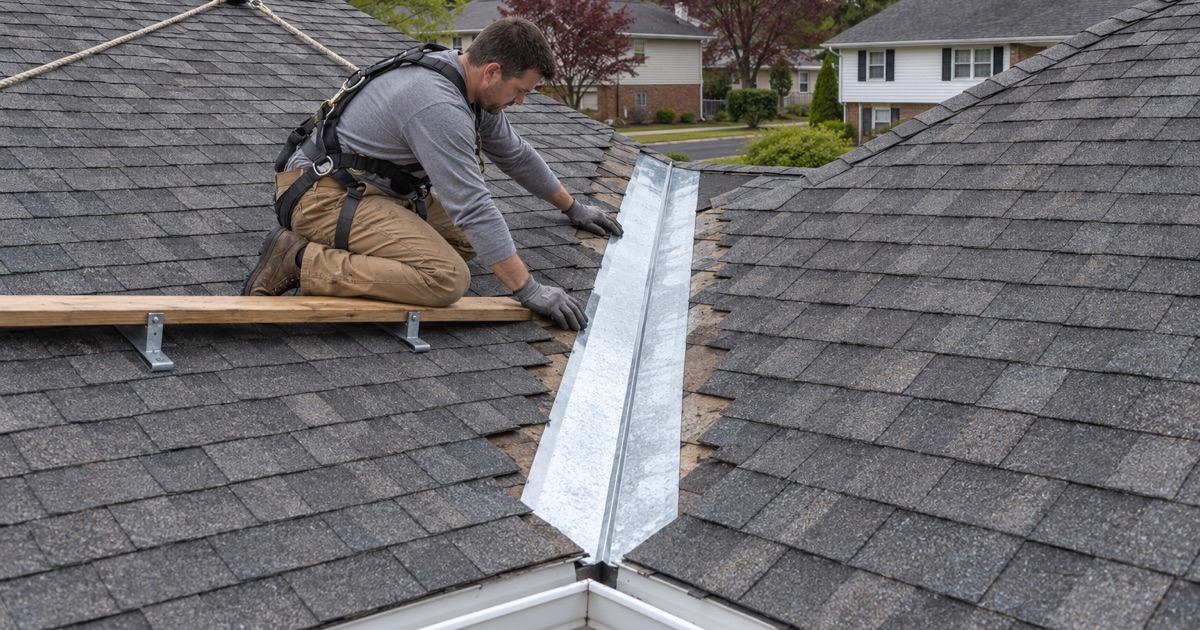
Penetrations account for a large share of the leaks we trace. Chimneys leak where step and counter flashing has pulled away or where the old flashing was reused under the last roof, pipe boots leak when the rubber cracks, and skylights leak where the curb flashing has failed. Each needs new flashing rather than more sealant.
On a wide chimney with no cricket, water piles up behind it every time it rains. Adding a cricket, or saddle, splits the flow around the chimney. Many chronic chimney leaks stop for good once that small structure is built.
Ice Dams and Winter Eave Leaks
In winter, heat escaping into the attic melts snow on the upper roof, and the water refreezes at the cold eaves. The ice ridge holds back meltwater that then works its way under the shingles. Ceilings along exterior walls and the tops of window frames are the usual places it appears.
The lasting fix is a self-adhering ice barrier at the eaves under the shingles, together with better insulation and ventilation so the snow does not melt unevenly. During an active ice dam, we can open channels to let water drain. Hacking at the ice with a shovel damages the shingles and is best avoided.
Gutters, Fascia and Roof-to-Wall Joints
Water that overshoots a gutter or runs behind it soaks the fascia and can enter the top of the wall. Missing drip edge is the usual cause, along with gutters that have pulled away from the house. Where a lower roof meets a wall, a missing kick-out flashing sends water down the siding instead of into the gutter.
These leaks often show up as stained siding or peeling paint before they reach the inside. We correct the drip edge, reset or replace the gutters and add kick-out flashing where the wall needs it. The gutters are pitched and sized with the roof so the water ends up where it should.
Commercial and Low-Slope Leak Repair
Membrane Seams and Punctures
On a flat or low-slope roof, most leaks come from open seams, punctures from dropped tools or foot traffic, and blisters that have split. We find the opening, clean the membrane and patch it with material that bonds to what is already there. EPDM, TPO and modified bitumen each need their own method.
Where water has gotten under the membrane, the insulation can stay wet long after the leak is fixed. We check soft areas and replace wet insulation where needed, since leaving it in place rots the deck and lets the roof leak again.
Drains, Scuppers and Parapet Walls
Internal drains and scuppers carry all the water off a flat roof, and a blocked or loose drain sends that water back under the membrane. Parapet walls leak through cracked caps and failed counter flashing. We clear and reseal drains, repair the flashing and rebuild caps where the wall is letting water in.
Rooftop Units and Curbs
Heating and cooling units sit on curbs with their own flashing, and service visits wear the membrane around them. We reseal the curb flashing and repair the worn areas. Walkway pads to the units help prevent the same wear from returning.
Temporary and Permanent Leak Repairs
Tarping an Active Leak
When water is coming in and the weather will not allow a permanent repair, we install a temporary cover to keep the house dry. A properly secured tarp is fastened so it does not tear in the wind or add new holes in the wrong places. We remove it when the permanent repair is made.
Making the Permanent Repair
The permanent fix replaces the part that failed, whether that is a boot, a run of flashing or a section of shingles and underlayment. We use the same materials and details we would use on a new roof. You receive photos of the repair before and after.
After the Leak: Insulation, Drywall and Insurance
Wet insulation in the attic should be replaced so it does not hold moisture against the ceiling. Stained drywall may need to be dried and repainted or replaced once the roof is sealed. If the leak came from storm damage, our photos and written description support your own insurance claim, and we will meet the adjuster on site when you ask.
- 20+ Years Experience
- Attic Checked on Every Leak
- Itemized Written Scopes