
Bensalem Quality Roofing handles skylight installation in Bensalem, PA, serving surrounding cities including Lower Southampton, Delran, Upper Southampton, Bristol Township and Cinnaminson. After 20+ years of roofing, we have replaced plenty of skylights that leaked not because of the window but because of how it was flashed, so every skylight we install goes in with the manufacturer’s flashing system and an ice barrier around the opening.
A skylight brings daylight into a hallway, bathroom, kitchen or upstairs room that would otherwise feel closed in. It is also a hole in the roof, and the detail around that hole decides whether it stays dry for decades or stains the ceiling within a few winters. We treat the flashing as the most important part of the job.
We install new skylights, replace old ones in existing openings and repair leaking skylights where the unit itself is still sound. The estimate lists the skylight, the flashing kit, the framing and the interior finishing as separate items.
Skylight Types We Install
Deck-Mounted Skylights
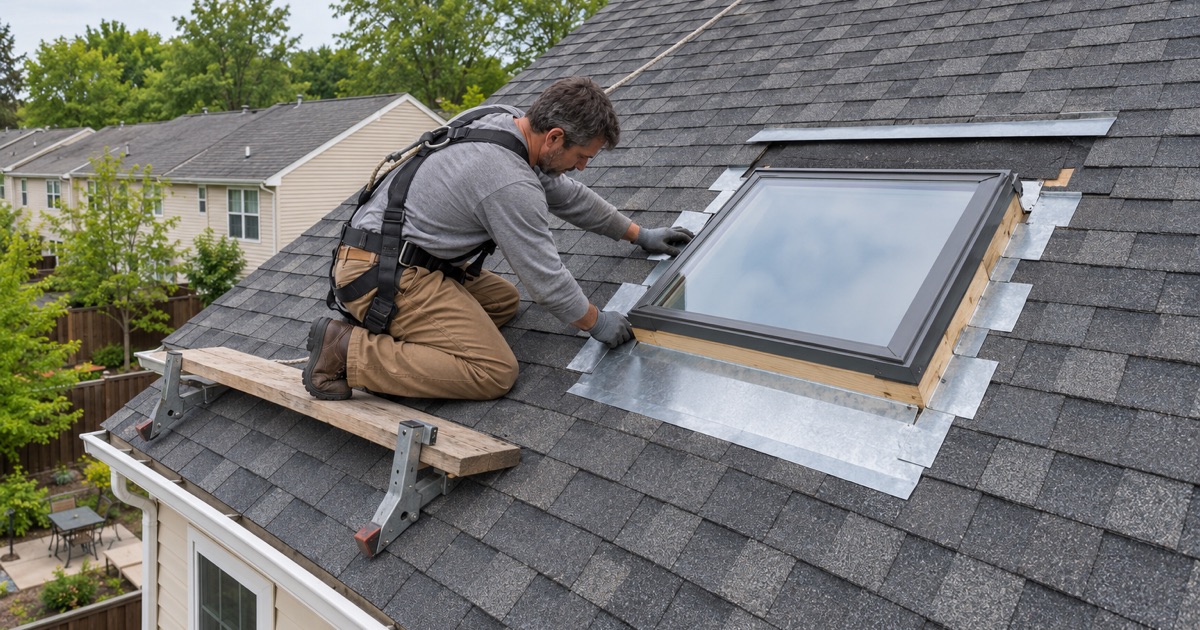
A deck-mounted skylight fastens directly to the roof deck and sits close to the surface of the roof, giving a clean, low profile. It is paired with a flashing kit designed for the shingle or roofing material around it. On pitched roofs, this is the type we install most often.
Because the flashing is engineered to weave into the shingles, a deck-mounted skylight sheds water the same way the rest of the roof does. It relies on the shingles and flashing working together rather than on sealant. That is the main reason it performs well.
Curb-Mounted Skylights
A curb-mounted skylight sits on a raised wooden frame, or curb, built on the roof. The curb lifts the skylight above the roof surface, which suits low-slope roofs where water moves slowly. It also suits replacements where an existing curb is still sound.
The curb itself is flashed into the roof with step flashing or membrane, and the skylight is fastened on top. On flat and low-slope roofs, the membrane is carried up the curb and protected. Getting that detail right is essential.
Fixed, Venting and Tubular Skylights
Fixed skylights provide light only, while venting skylights open to let warm, moist air escape from a bathroom or kitchen. Some venting models open manually and others electrically, and some close automatically in rain. Tubular skylights bring daylight through a reflective tube into rooms with no direct roof access above.
We help you choose based on the room, the roof and what you want the skylight to do. A bathroom often benefits from a venting model. A closet or interior hallway may suit a tubular skylight.
Installing a Skylight So It Stays Dry
Manufacturer Flashing Kits
We install skylights with the manufacturer’s matching flashing kit, such as Velux skylight flashing kits, rather than improvised metal and caulk. These kits are designed to integrate with the skylight frame and the surrounding roofing. They include the head, side and sill pieces needed to carry water around the opening.
Using the proper kit also keeps the manufacturer’s warranty valid in most cases. Improvised flashing can void it. More importantly, the kit is what keeps the skylight dry.
Ice Barrier Around the Opening
Before the flashing goes on, we wrap the opening with a self-adhering ice and water barrier that seals around the skylight frame and laps onto the underlayment. This second line of defense stops any water that gets past the flashing in wind-driven rain or an ice dam. It is a step that improvised installations often skip.
Framing the Roof Opening
A new skylight means cutting into the roof deck and, often, the rafters. Rafters that are cut have to be headed off and supported so the roof keeps its strength. We frame the opening properly and size it to the skylight so the unit sits square.
Inside, the light shaft from the roof to the ceiling is framed, insulated and finished. A well-insulated shaft reduces condensation and heat loss. The interior finish is listed separately on the estimate.
Skylights and Your Roof
Adding or Replacing Skylights During a Re-Roof
The best time to add or replace a skylight is while the roof is being replaced, because the shingles around the opening are already off. The flashing kit integrates with the new underlayment and shingles in one process. The cost is lower than doing the skylight separately later.
Replacing an Old Skylight
Older skylights can fog between the panes, lose their seals or develop leaks at the frame. Replacing the unit in an existing opening is usually straightforward if the opening matches a current size. If it does not, the opening can be reframed to fit a new unit.
Skylights on Low-Slope Roofs
On low-slope roofs, a curb-mounted skylight is usually the right choice, with the roofing membrane carried up the curb. The curb height keeps the skylight above slow-moving water. Ponding near the skylight is corrected so water does not sit against the curb.
Light, Heat and Comfort
Glazing and Heat Gain
Modern skylights offer glazing options that reduce heat gain in summer and heat loss in winter. Low-emissivity coatings and laminated glass are common choices. Blinds or shades can be added to control light and heat in rooms that face strong sun.
Condensation and Ventilation
Warm, humid air meeting cold skylight glass can condense and drip, which is often mistaken for a leak. Venting skylights, bathroom fans and an insulated light shaft help reduce it. We check for an actual leak before blaming condensation, or the other way around.
Skylight Leaks and Repairs
Repairing Flashing Around an Existing Skylight
When a skylight leaks but the unit is sound, the flashing is usually the cause. We remove the shingles around the skylight, replace the flashing with a proper kit and reshingle the area. If the skylight itself has failed, we recommend replacing it while the flashing is open.
- 20+ Years Experience
- Attic Checked on Every Leak
- Itemized Written Scopes